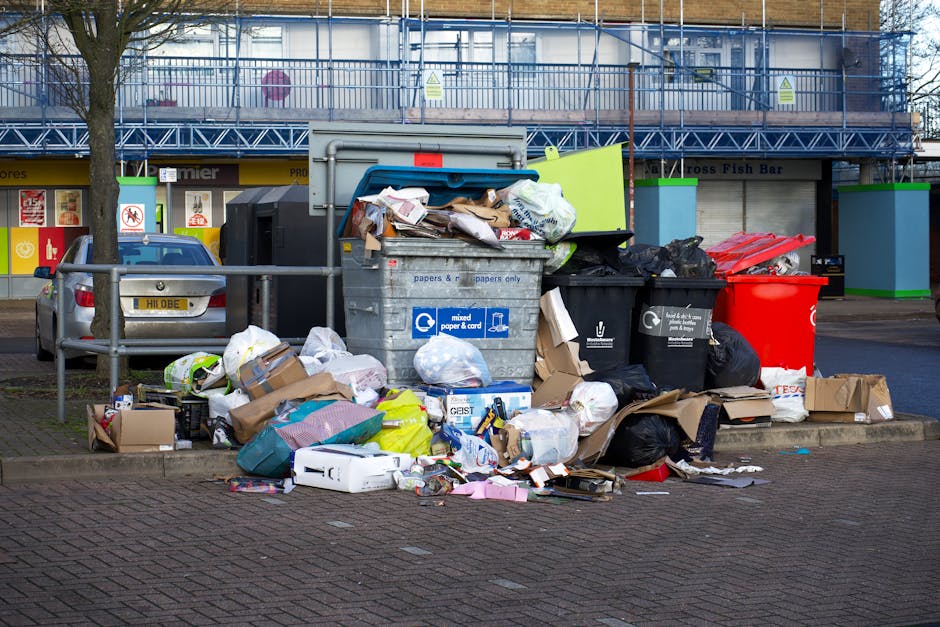
Avoid hidden rubbish removal charges in Wandsworth: a practical guide to paying the price you were actually quoted
If you have ever booked rubbish removal and then stared at the final invoice thinking, "Hang on, where did that come from?", you are not alone. Hidden charges are one of the quickest ways to turn a straightforward clearance into a frustrating, expensive mess. This guide explains how to avoid hidden rubbish removal charges in Wandsworth, what fair pricing should look like, and how to spot the small print before it bites.
Whether you are clearing a flat near the station, dealing with builder's waste after a refurb, or just trying to get rid of a few bulky items without drama, the same rule applies: the quote should make sense, and the bill should match it. Simple enough, right? Well, sometimes not. Let's unpack the common traps and how to steer around them.
Why avoiding hidden rubbish removal charges matters
Hidden charges matter because rubbish removal is often booked under pressure. You may be juggling a move, a renovation, a garage clear-out, or a deadline from a landlord, and that is exactly when vague quotes become risky. If a company gives you a low headline price but quietly adds extras for access, labour, congestion, loading time, certain item types, or disposal categories, the final cost can jump fast.
In Wandsworth, where a lot of properties involve tight frontages, stair-only access, parking pressure, and mixed loads from flats or refurbishments, those extras can appear more often than people expect. To be fair, some add-ons are legitimate. The issue is not that every extra charge is bad; it is that surprise charges are usually a sign the pricing was not explained properly at the start.
That is why a clear, written quote is more than a nice-to-have. It gives you a baseline for comparison, helps you budget properly, and reduces the awkward back-and-forth at the kerbside when the crew arrives and suddenly needs to "reassess" the job. Nobody wants that conversation. Nobody.
Practical takeaway: a good rubbish removal quote should tell you what is included, what could cost more, and what would trigger a change. If those points are missing, pause before you book.
It also helps you compare providers on the right basis. The cheapest quote is not always the cheapest job. The real question is: what will you actually pay once the waste is loaded, weighed, sorted, and taken away?
How rubbish removal pricing usually works
Most rubbish removal services price jobs using one or more of these methods: volume, weight, labour, item type, or a fixed-price assessment. In real life, many quotes blend several factors. That is normal. What matters is whether the provider explains the formula clearly enough for you to understand the likely final bill.
For example, a small domestic clear-out might be charged by van load or cubic yard equivalent, while larger or mixed waste jobs may also factor in whether two people are required, how many flights of stairs are involved, and whether the waste includes restricted items such as appliances or anything classed as hazardous. If you are dealing with office clearance, builders' debris, or specialist items, the pricing logic may be different again.
A strong quote process usually works like this:
- You describe the waste, access, and timing.
- The company gives an estimate or fixed quote based on those details.
- Any possible extras are explained before booking.
- The team confirms the final price on arrival if the load differs materially from the description.
- The invoice matches the agreed scope, with any changes documented.
Where problems start is when the provider keeps the estimate loose on purpose. You might hear phrases like "starting from", "subject to assessment", or "we'll know when we get there". Sometimes that is fair enough if the job genuinely cannot be assessed remotely. But if the quote is not anchored to a specific set of inclusions, you are taking a gamble.
If you want to compare prices more carefully, the pricing and quotes page is a sensible place to start because it should help you understand how the service approaches costs before you commit.
Key benefits and practical advantages
Being cautious about hidden charges is not just about saving money, though that is obviously part of it. The broader benefit is control. You get a clearer picture of the job, a better sense of what the service can handle, and fewer unpleasant surprises on the day.
Here is what that looks like in practice:
- Better budgeting: you can plan the actual spend instead of guessing and hoping.
- Less stress on collection day: there is no last-minute debate over stair carry, extra bags, or "unexpected" items.
- Fairer comparisons: you compare like with like, not a bargain headline against a full-service quote.
- Fewer delays: if access or waste type is discussed up front, the team can bring the right labour and equipment.
- Cleaner paperwork: written terms and a clear quote make it much easier to resolve issues if something feels off later.
There is also a knock-on benefit for customer confidence. When a company is transparent, it usually feels more organised overall. That may sound small, but it matters. A rubbish removal job often happens during a hectic moment in your life, when the hallway is full of boxes, the kettle is on, and you are trying not to trip over a broken chair. Good pricing calm that whole scene down a bit.
If you are planning a larger clearance, you may also find it useful to explore related services such as house clearance, flat clearance, or office clearance, because a service built around the right job type is less likely to surprise you with a broad "miscellaneous" charge.
Who this is for and when it makes sense
This advice is for anyone booking waste clearance in Wandsworth, but it is especially useful if your job has any of the following traits:
- you are clearing a property with limited parking or narrow access
- the waste is mixed, bulky, or awkward to move
- you are comparing several quotes and the price difference looks suspiciously large
- you have items that may need specialist disposal, such as appliances or mattresses
- you need a same-day or short-notice pickup
- you are managing a landlord, tenant, builder, or facilities deadline
It also matters if you are booking for a business rather than a home. Business waste removal can involve different expectations around access, timings, documentation, and recycling. If that sounds like your situation, the business waste removal service may give you a more relevant framework than a generic one-off clearance.
For households, hidden charges often show up with furniture, white goods, loft contents, garden cuttings, garage clutter, and building debris. A few bags of rubbish may seem straightforward. Then the sofa turns out to be waterlogged, the fridge needs special handling, or the loft hatch is narrower than you remembered. That is where clear pricing earns its keep.
Truth be told, if the job has even one odd variable, you should ask more questions than you think you need to. Better a slightly longer phone call than an inflated bill later.
Step-by-step guidance
Here is a simple process you can use before booking, and yes, it works whether you are clearing a single room or a full property.
1. List the waste honestly
Write down what needs removing, including approximate quantity and item types. Be specific. "Rubbish" is too vague. "Two wardrobes, one sofa, four black bags, some broken shelving, and a damaged desk" is much better.
2. Check access conditions
Tell the company about stairs, parking, lift access, loading distance, gates, or anything that makes the job slower. A two-minute lift journey is not the same as carrying heavy furniture down four flights, and pricing should reflect that.
3. Ask what is included
Does the quote include labour, loading, disposal, recycling, congestion or parking costs, and VAT where relevant? Ask plainly. Most people are too polite here, then regret it later. Don't be shy.
4. Ask about charge triggers
Find out what would change the price. Is it volume, extra weight, difficult access, extra sorting time, or unexpected item types? The point is not to avoid all extras. The point is to know them in advance.
5. Request the quote in writing
A written quote or message trail gives you something concrete to refer back to. If a price was discussed over the phone, ask for the same terms in writing before collection day.
6. Compare more than the headline price
Look at scope, speed, item restrictions, and transparency. A slightly higher quote may actually be better value if it is properly inclusive.
7. Confirm the final scope before loading starts
On the day, do a quick walk-through with the crew. If anything has changed, say so immediately. That conversation is much easier before the van is half full.
If you are still unsure how to judge value, the waste removal service overview can help you think through the wider scope of a job rather than just the price tag.
Expert tips for better results
After enough clear-outs, a few patterns become obvious. The jobs that stay within budget usually share the same habits.
- Photograph the waste and access: a few clear photos often prevent misunderstandings better than a long phone description.
- Separate obvious specialist items: appliances, mattresses, and potentially hazardous items should be flagged early.
- Measure awkward furniture: if a sofa, wardrobe, or desk needs dismantling, say so. That matters more than people think.
- Be realistic about volume: underestimating pile size is one of the fastest ways to trigger a price change.
- Ask about recycling routes: transparent companies usually have a better handle on sorting, which can reduce confusion on the day.
One practical tip that saves hassle: stand in the room and imagine the collection team arriving on a wet Tuesday morning. Would they be able to park close? Can they carry items out without reshuffling half the hallway? That little mental rehearsal often reveals the charge risks before the actual booking.
For bulky household items, it can also help to check whether the provider offers dedicated disposal routes such as furniture disposal or mattress and sofa disposal. Job-specific services often come with clearer pricing expectations than a vague mixed-load option.
Common mistakes to avoid
Most hidden charges are not magic. They appear because something was assumed rather than stated. These are the usual slip-ups.
- Booking on price alone: the cheapest headline quote can become the most expensive final bill.
- Not describing access properly: stairs, lifts, gates, distance to van, and parking all matter.
- Forgetting to mention specialist items: appliances, fridges, mattresses, and hazardous materials can change handling costs.
- Assuming "all-inclusive" means everything: sometimes it does, sometimes it very much doesn't.
- Leaving the final check until collection time: that is when pricing discussions get uncomfortable.
- Not reading terms carefully: yes, it is boring. But the boring part is where surprises hide.
Another common mistake is treating every provider as if they price the same way. They do not. Some are more transparent, some are more operationally flexible, and some lean on extras. It is a bit like buying a train ticket in London: the displayed price is only useful if you understand the conditions attached. Not glamorous, but very real.
If your waste stream includes items that need careful handling, such as fridge and appliance removal or hazardous waste disposal, make sure the provider is clear about whether those items are accepted and what, if anything, changes in cost.
Tools, resources and recommendations
You do not need a fancy toolkit to avoid hidden rubbish removal charges. A few practical tools are enough.
- Your phone camera: photos of the waste pile and access route are often the most useful evidence you can share.
- Basic measurements: width of doorways, stair turns, ceiling height in lofts, and any awkward corners.
- A written list: note item types, counts, and anything breakable, heavy, wet, or awkward.
- Booking notes: keep a record of the quote, what was included, and who said what.
- Service pages: if your job is specialised, compare it with relevant pages such as builders waste clearance, garden clearance, or loft clearance so you are matching the service to the waste.
For anyone concerned about payment handling, a look at payment and security can be reassuring because it shows the sort of payment expectations and safeguards you should confirm before handing over card details or making an online booking.
If sustainability matters to you, it is also worth checking how the company talks about sorting, reuse, and recycling. A service that takes recycling seriously is often more transparent overall. The recycling and sustainability page is a good sign that the business is thinking beyond simply tipping everything into one pile.
Law, compliance and best practice
Rubbish removal is not only about convenience. In the UK, waste must be handled responsibly, and customers should be careful to use a company that operates lawfully and clearly. You do not need to become a compliance expert, but a few basics help.
Best practice usually includes:
- clear description of the waste before collection
- transparent pricing terms and any likely extra charges
- appropriate handling of restricted or hazardous items
- care around access, loading, and site safety
- reasonable documentation or confirmation of what was agreed
It is also sensible to ask whether the provider has relevant insurance and safety procedures. That does not just protect the business; it helps protect you if there is damage during collection or if the job needs careful lifting through a tight space. The page on insurance and safety is useful for checking how that side of the service is framed.
For business customers, written clarity matters even more. If you are disposing of confidential material, mixed office waste, or regular commercial loads, a service such as confidential shredding can be relevant because the service choice affects both handling and pricing expectations.
Also, keep an eye on the provider's terms and conditions. Not because you expect a legal drama, but because the terms often reveal the exact situations where a quote may change. That is where the real story usually is.
Options and comparison table
There is more than one way to deal with unwanted waste in Wandsworth, and the best option depends on volume, urgency, item type, and access. Below is a straightforward comparison to help you think it through.
| Option | Best for | Typical pricing clarity | Hidden charge risk | Notes |
|---|---|---|---|---|
| General rubbish removal | Mixed household or light commercial waste | Medium to high if quoted well | Medium | Ask how volume, labour, and access are measured. |
| Specialist item disposal | Fridges, mattresses, sofas, appliances | Usually clearer | Low to medium | Good when your load is made up of one or two specific item types. |
| House or flat clearance | Whole rooms, estate clearances, moving house | High if inventory is detailed | Medium | Works best when the property is listed room by room. |
| Builders waste clearance | Renovation debris and construction leftovers | Medium | Medium to high | Weight, access, and load type matter a lot here. |
| Skip-style approach | Longer jobs with predictable waste | Often straightforward | Depends on fill rules | Check what can go in a skip before choosing this route. |
If you are leaning toward a skip-style solution, the page on what can go in a skip is worth reading because restricted contents are a classic source of extra cost and hassle.
For some people, a dedicated service page is the better fit than a broad general service. For example, if you are clearing a garage, the garage clearance page may help you judge what to expect from the job and how the pricing may be framed. Same with furniture clearance if you are mostly dealing with bulky household items. Small detail, big difference.
Case study or real-world example
Here is a realistic example, based on the kind of situation that comes up all the time in London.
A tenant in Wandsworth was moving out of a top-floor flat with no lift. The load was a sofa, a broken desk, a chest of drawers, several bags of mixed household waste, and a small appliance. The first quote they received was low and sounded attractive. But the quote only covered basic loading and a "standard access assumption", which the tenant did not really notice on first read.
After a proper check, the access turned out to involve a narrow stairwell and a long carry from the nearest legal parking space. The second provider explained that clearly, listed the item types, and confirmed the final price in writing. The second quote was a little higher up front. In the end, it was cheaper overall because there were no last-minute add-ons or awkward disagreements at the door.
The lesson is not that every cheap quote is bad. Sometimes it is genuinely competitive. The lesson is that clarity beats optimism. A job can look simple from the hallway and still be awkward once the van is parked and the stairs start creaking. That is just life, really.
For anyone handling a whole property rather than a single load, the same logic applies to home clearance and house clearance. Item lists, access notes, and clear exclusions matter more than people expect.
Practical checklist
Use this quick checklist before you book. It takes a few minutes and can save you a lot more than that.
- Have I described every item honestly and in enough detail?
- Have I explained access, parking, stairs, lifts, and distance to the vehicle?
- Have I checked whether appliances, mattresses, sofas, or hazardous items are included?
- Do I know whether the quote is fixed or estimated?
- Have I asked what would cause the price to change?
- Is the quote in writing?
- Have I read the terms and conditions carefully?
- Do I understand how payment will be taken and when?
- Have I chosen the right type of clearance service for the job?
- Do I have photos or notes in case there is a dispute later?
A small but important extra: if you are dealing with a business premises, keep a copy of the booking details and any internal sign-off. It sounds formal, but it helps if someone later asks why the cost changed. A five-line email can save a half-hour headache.
Conclusion
Avoiding hidden rubbish removal charges in Wandsworth comes down to three things: clear description, clear pricing, and clear expectations. If you can get those aligned before collection day, you are already ahead of most of the problems people run into.
Be specific about what needs removing. Ask what is included. Check the triggers for extra costs. And trust your instinct if a quote feels slippery. A good provider should be able to explain the numbers in plain English without making it feel like a test. That alone tells you a lot.
If you want the most reliable outcome, choose the service that treats transparency as part of the job, not an optional extra. That is the real difference between a smooth clearance and a frustrating one.
Get a free quote today and see how much you can save.
And if nothing else, remember this: the best rubbish removal experience is the one where the only surprise is how quickly the clutter disappears.
Frequently Asked Questions
What counts as a hidden rubbish removal charge?
A hidden charge is any extra fee that was not made clear before booking, such as access costs, extra labour, item restrictions, or disposal add-ons that appear on the final bill.
How can I compare rubbish removal quotes properly?
Compare the full scope, not just the headline price. Check what is included, whether the quote is fixed or estimated, and what would trigger a price change.
Are same-day rubbish removal jobs more likely to have extra fees?
They can be, mainly because urgent jobs may need faster scheduling or specific vehicle planning. That said, a well-run company should still explain any premium clearly in advance.
Why does access affect the price?
Access affects labour time and carrying effort. Stairs, long carries, parking distance, and narrow entrances can all increase the work involved, so they often influence cost.
Should I send photos before booking?
Yes, photos help a lot. They reduce misunderstandings about volume, access, and item type, and they can make quotes more accurate.
Do mattresses, sofas, and fridges cost more to remove?
Often they do, because they may need special handling or separate disposal arrangements. It is best to ask about those items early rather than assume they are included.
Is a fixed-price quote better than an estimate?
A fixed price is usually easier to plan around, but only if the job details are accurate. An estimate can still be fair if the provider clearly explains what might change it.
What should a transparent quote include?
It should state the waste description, access assumptions, included labour, disposal approach, and any likely extras. Ideally, it should also be given in writing.
Can business customers avoid hidden charges too?
Absolutely. In fact, businesses often benefit even more from clear pricing because repeated collections, access rules, and documentation can make costs drift if they are not agreed properly.
What if the crew says the job is bigger than expected when they arrive?
Ask them to explain exactly what has changed and how that affects the price. If the difference is genuine, a revised price may be reasonable; if not, you can challenge it using the written quote.
How do I know whether a service is right for my type of waste?
Match the service to the waste. Mixed household items, furniture, builders' debris, garden waste, or office clearance all have different handling needs and may be priced differently.
What is the safest next step if I am unsure?
Gather photos, item notes, and access details, then ask for a written quote with clear inclusions. That is the simplest way to reduce surprises and make a confident decision.